
Protection from sun, water and oil
Sealcoating in Biloxi, MS
Sealer costs far less than new asphalt. Put on at the right time, it slows the wear.
- Free on-site estimates
- Written, itemized quote with base and asphalt thickness listed
- MS811 locates requested before any digging or grading
What Sealcoating Can and Cannot Do
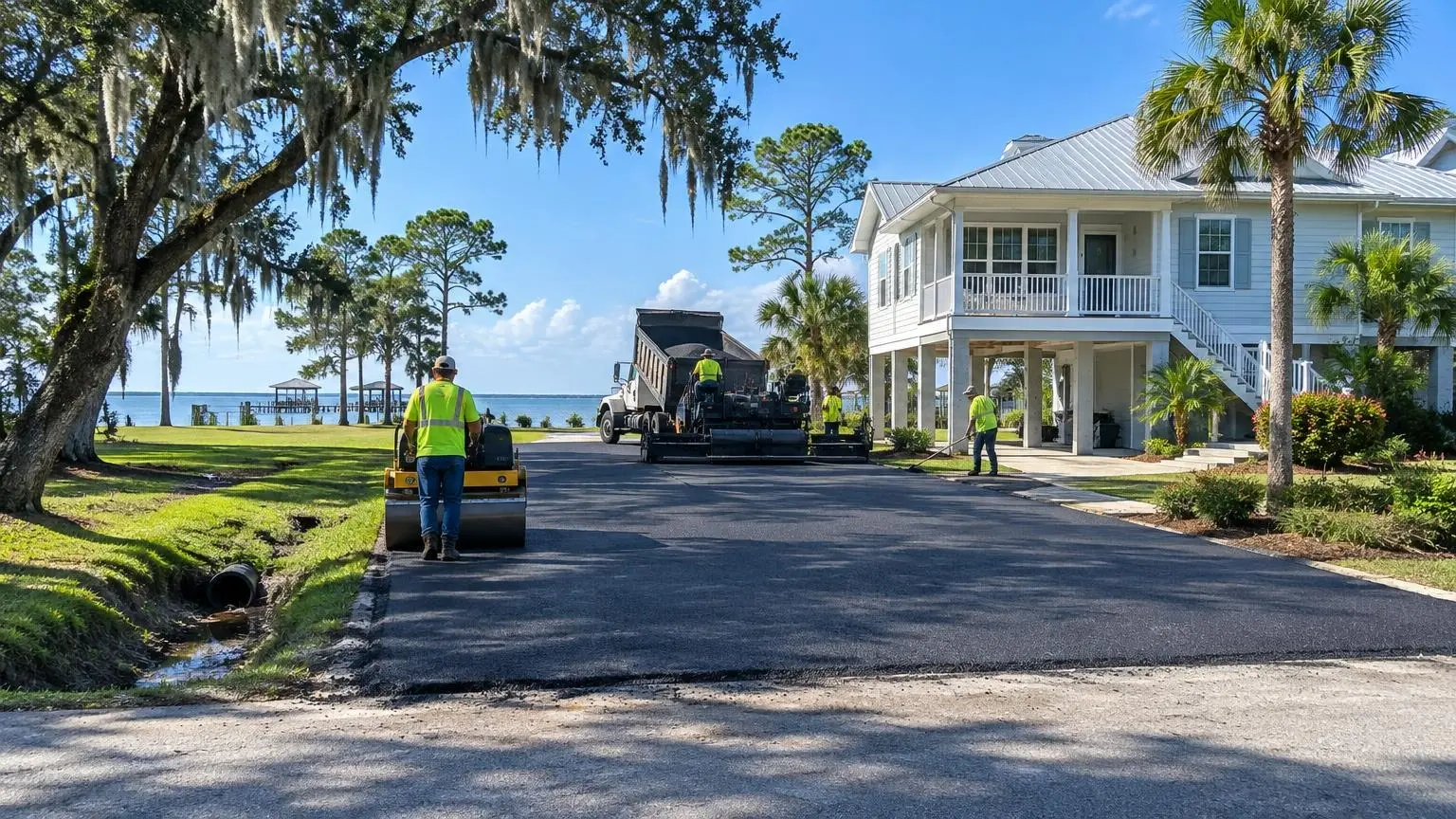
Sealcoating is a thin protective coat spread over asphalt. On the Gulf Coast, where summer sun is strong and rain falls on more than a hundred days a year, sealcoating slows the oxidation that turns black asphalt gray and brittle, and it helps keep water and spilled oil from soaking into the surface. It also makes a driveway or lot look fresh again. What it cannot do is fill potholes, level dips or fix a soft base. Those need repair work first.
When to seal
New asphalt has to cure before it is sealed. HomeGuide's sealing guide says to wait 3 to 6 months after paving, and its driveway guide suggests waiting a year. After that, HomeGuide says resealing every 2 to 10 years is typical depending on the product and the climate. Sealer needs dry pavement and temperatures between about 50 and 95 degrees. In Biloxi, temperature is rarely the problem outside the hottest summer afternoons. Rain is. A fresh coat that gets rained on before it sets can wash off, so we plan around the forecast and avoid days with afternoon storms likely.
How we sealcoat
- Clean: blow and sweep the surface, and treat oil and fuel spots so sealer can bond.
- Fill cracks: cracks are filled with hot rubberized sealant first, because sealer alone does not bridge them.
- Patch: failed areas are repaired before sealing.
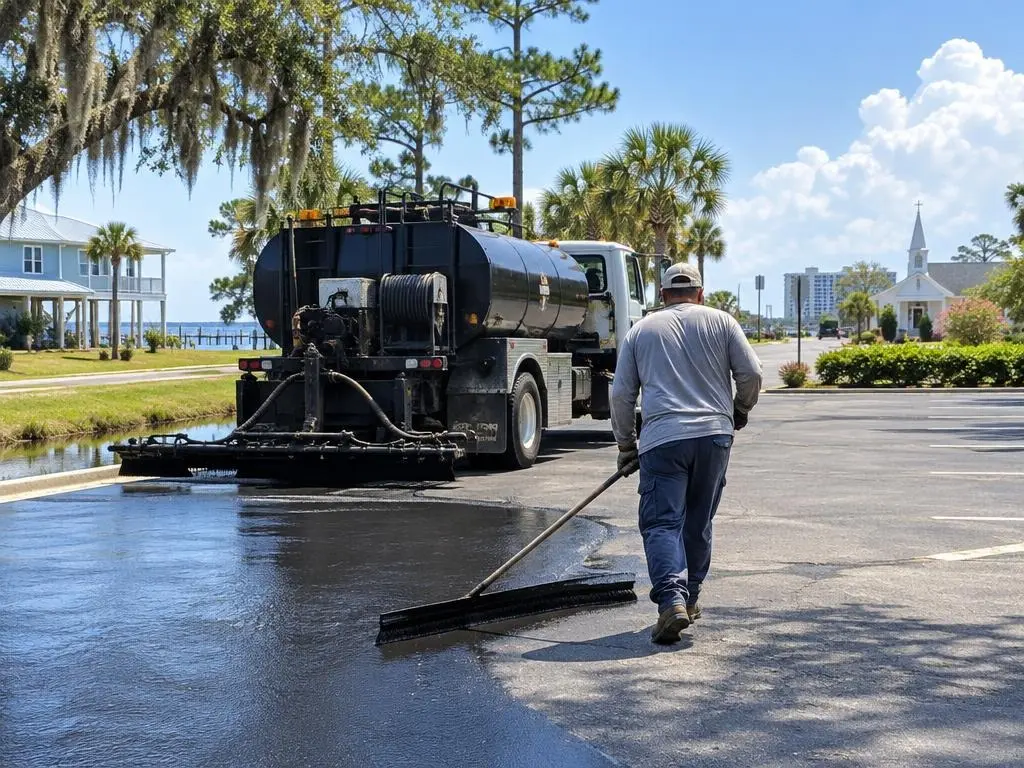
- Edge and apply: edges are cut in by hand and sealer is applied in even coats.
- Cure: the area is closed off. HomeGuide lists 12 to 72 hours before driving and 1 to 3 hours before walking.
Choosing a sealer
Coal tar and asphalt emulsion sealers are the two most common types. HomeGuide notes that many areas have banned coal tar emulsion because of health and environmental concerns, and that asphalt polymer emulsion stains more easily from gas and oil. We tell you which product we plan to use on your job before we start.
Shade, sand and leaves
Many coastal driveways run under live oaks and pines. Shade keeps the surface damp longer after rain, and sap, leaves, needles and blown sand hold moisture and keep sealer from bonding. We clean those surfaces carefully and pick a dry stretch so the sealer can cure even in the shade.
Is it worth the money?
For pavement in decent shape, yes. HomeGuide puts the national average for a driveway at about $600, with a 400-square-foot driveway at roughly $400 to $800. That is small next to the cost of resurfacing or replacement. For pavement that is already failing structurally, sealcoat is mostly cosmetic, and we will tell you so.
Parking lots
Commercial lots are sealed in sections so part of the lot stays open. HomeAdvisor lists parking lot sealcoating at $0.15 to $0.30 per square foot. Sealer covers the old lines, so striping is repainted after it cures.
What Sealcoating Includes
Most of the job is prep.
Cleaning and oil-spot treatment
Surface cleaned so sealer bonds.
Hot crack filling
Cracks filled before the sealer goes down.
Sealer application
Even coats with hand-cut edges.
Restriping for lots
Lines repainted after the sealer cures.
Typical Sealcoating Costs
| Item | Published national range |
|---|---|
| Driveway sealing (HomeGuide) | $1 to $2 per sq ft |
| 1-car, 288 sq ft (HomeGuide) | $290 to $580 |
| 2-car, 400 sq ft (HomeGuide) | $400 to $800 |
| 3-car, 864 sq ft (HomeGuide) | $860 to $1,700 |
| 50 ft circular, 1,650 sq ft (HomeGuide) | $1,700 to $3,300 |
| Parking lot sealcoating (HomeAdvisor) | $0.15 to $0.30 per sq ft |
National ranges from published cost guides, which each figure costs differently. Prices on the Gulf Coast can differ, and base repair, drainage work, removal and access all move the total. Your written estimate is the price.
How It Works
1. Check condition
We note cracks and failed spots that need work first.
2. Quote
Square footage, crack filling and repairs priced separately.
3. Prep
Clean, treat oil spots, fill cracks, patch.
4. Seal and cure
Sealer applied on a dry day; area closed until it sets.
Sealcoating Questions
How often should I sealcoat on the coast?
Every few years for most driveways. HomeGuide gives a range of 2 to 10 years depending on the sealer and the climate. Strong sun and frequent rain push most coastal driveways toward the shorter end.
Can a brand-new driveway be sealed?
Not right away. HomeGuide recommends waiting 3 to 6 months, and its driveway guide suggests a year, so the asphalt can cure first.
Does sealcoat hide cracks?
It darkens them but does not fill them. Cracks have to be filled first or they keep letting water into the base.
What happens if it rains right after sealing?
Rain before the sealer sets can wash it off or leave it streaked. That is why we watch the forecast closely and only seal when there is a dry window long enough for it to cure.
Sealcoating Service Areas
- Asphalt Paving in Biloxi, MS
- Asphalt Paving in Gulfport, MS
- Asphalt Paving in D'Iberville, MS
- Asphalt Paving in Ocean Springs, MS
- Asphalt Paving in Gautier, MS
- Asphalt Paving in Long Beach, MS
- Asphalt Paving in Pascagoula, MS
- Asphalt Paving in Moss Point, MS
- Asphalt Paving in Pass Christian, MS
- Asphalt Paving in Diamondhead, MS
- Asphalt Paving in St. Martin, MS
- Asphalt Paving in Gulf Hills, MS
- Asphalt Paving in Gulf Park Estates, MS
- Asphalt Paving in Latimer, MS
- Asphalt Paving in Vancleave, MS
- Asphalt Paving in Saucier, MS
- Asphalt Paving in Lyman, MS
- Asphalt Paving in Escatawpa, MS
- Asphalt Paving in Helena, MS
- Asphalt Paving in DeLisle, MS
- Asphalt Paving in Kiln, MS
- Asphalt Paving in Bay St. Louis, MS